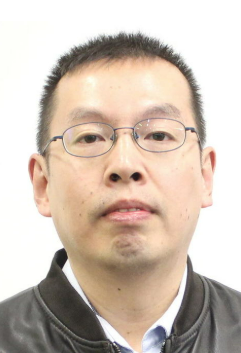
 | Prof. Jianhua Zhang, Oslo Metropolitan University, NorwayJianhua Zhang received PhD in electrical engineering and computer science from Ruhr University Bochum, Germany, in 2005 and did postdoctoral research at the University of Sheffield, UK, from 2005 to 2006. He has been Professor in AI at Department of Computer Science, Oslo Metropolitan University, Norway since 2018. From 2007 to 2017 he was Professor with School of Information Science and Engineering, East China University of Science and Technology, Shanghai, China. He was Guest Scientist at TU Dresden, Germany, from 2002 to 2003 and Visiting Professor at TU Berlin, Germany, between 2008 and 2015 and the University of Catania, Italy in 2024. Dr Zhang’s recent research interests include computational intelligence, machine learning, intelligent systems and control, biomedical signal processing, and neurocomputing. In those areas he has published four books, 11 book chapters, and more than 200 peer-reviewed journal and conference papers. Dr Zhang served as Chair of IFAC (International Federation of Automatic Control) Technical Committee on Human-Machine Systems (2017-2023) and Vice Chair of IEEE Norway Section (2019-2023). He currently serves as Vice Chair of IFAC Technical Committee on Human-Machine Systems (2023-) and Vice Chair of IEEE CIS (Computational Intelligence Society) Norway Chapter (2019-). He serves (or served) on editorial board of four international scientific journals, including Frontiers in Neuroscience, Cognitive Neurodynamics (Springer), and Cognition, Technology & Work (Springer). He served as chair or keynote speaker for a number of international conferences. He has been listed in Stanford/Elsevier's World Top 2% Scientists Rankings in recent years (2023-2025). Title: Parameters Estimation for PDE-governed Complex Systems via Intelligent Computing Approaches |
| Prof. Zonghua Zhang, CRSC Co., Ltd., ChinaProfessor Zonghua Zhang has over 20 years of academic and industrial experience working at the intersection of cyber resilience, networking, and applied machine learning, focusing on building resilient, trustworthy autonomous networks and systems. He holds a Ph.D. in Information Science and an HDR in Computer Science. He served as a Chief Expert at Huawei Paris for 4.5 years, following a 15-year academic career as a Full Professor at IMT and a researcher at NICT, INRIA, JAIST, and the University of Waterloo. Prof. Zhang has led over a dozen national, international, and industrial projects, publishing more than 100 articles in top-tier journals and conferences. His accolades include the JSPS Invitational Fellowship, Thailand’s NRCT Excellent Ph.D. Supervisor Award, and multiple Best Paper Awards. He has served on the Computers & Security editorial board for over a decade and is the co-founder and three-time chair of the International Workshop on Resilient and Trustworthy Machine Learning-Driven Systems (ARTMAN), which has been co-located with ACM CCS and ACSAC. Title: Toward an Adaptive Cyber Resilience Paradigm for Rail Control Systems in the Era of Digital Intelligence |
| Prof. Weidong Yang, Xidian University, ChinaWeidong Yang is a Huashan Distinguished Professor and Ph.D. Supervisor at Xidian University, where he serves as Director of the Institute of Satellite Internet. He is also a member of the CCF Technical Committee on the Internet of Things, a recipient of the Provincial Distinguished Young Scholar Award, and a Provincial Academic and Technical Leader. His research interests include IoT systems and security, satellite Internet security, and satellite-enabled applications. He has led or participated in more than ten major national research projects, including the National High-Tech Research and Development Program (863 Program), the National Key R&D Program of China, and projects funded by the National Natural Science Foundation of China (NSFC). He has received four provincial and ministerial-level Second Prizes for scientific and technological achievements. Title: Satellite Signal Detection, Analysis, and Security Enhancement |
| Prof. Qingfan Gu, AVIC Civil Aircraft Airborne System Engineering Center Co., Ltd, ChinaGu Qingfan is a Professor and Chief Engineer at AVIC Civil Aircraft Airborne System Engineering Center Co., Ltd. He is also a Distinguished Technical Expert of AVIC, an expert of the Operation Support Group for Civil Aircraft Research of MIIT, Secretary of the Airborne Systems Expert Group, a member of the Navigation Branch of the China Electronics Society, and a member of the Architecture Technology Branch of the China Aeronautical Society. He has long been engaged in system architecture and safety-related work for both aircraft development programs and research projects. He has led or served as principal investigator for multiple projects, including the National Basic Research Program (973 Program), the National Defense 973 Program, and the 13th Five-Year Plan projects of MIIT. He has published 13 papers and 1 book. Title: An Efficient Prime Path Extraction Algorithm for Complex Control Flows and Its Application in Coverage Analysis |